Taking Steps Again in Hangzhou: A Russian Girl’s Progress Following Spinal Neural Interface Implantation and Rehabilitation
According to a report published by Chao News on September 2, 2026, 12-year-old Vera from Russia was taking steps with the support of a walker in the spinal cord injury clinical research ward at the Second Affiliated Hospital, Zhejiang University School of Medicine.
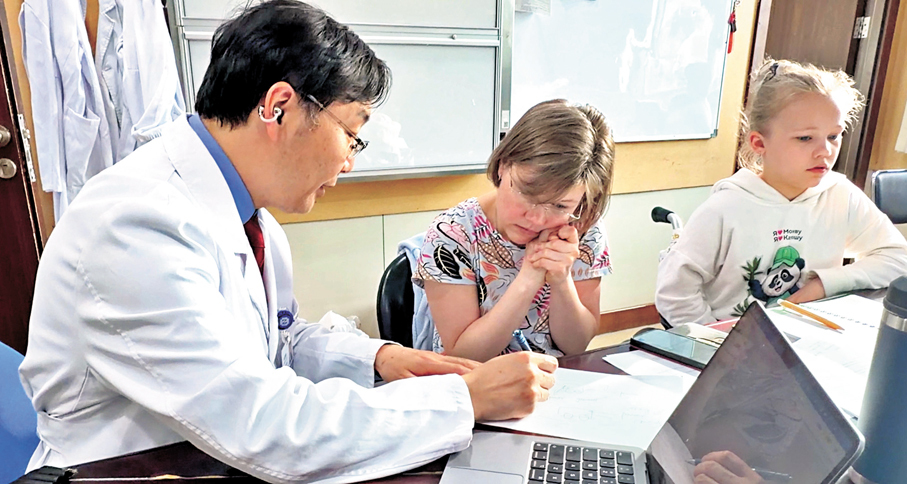
“I like walking.”
According to a report published by Chao News on September 2, 2026, 12-year-old Vera from Russia was taking steps with the support of a walker in the spinal cord injury clinical research ward at the Second Affiliated Hospital, Zhejiang University School of Medicine.
Following a severe spinal cord injury sustained in a road traffic accident, Vera underwent implantation of a closed-loop spinal neural interface and continued rehabilitation. She subsequently regained some lower-limb function and became able to take voluntary steps with the assistance of a walker.
From Moscow to Hangzhou: Seeking Further Treatment
Vera is from Moscow. According to the report, a road traffic accident severely injured her thoracic spinal cord, resulting in loss of movement in both legs and substantial sensory loss. Her mother sought treatment at several hospitals in Russia, where Vera underwent eight months of rehabilitation with limited improvement in lower-limb function.
Her family continued to explore treatment options and eventually contacted the hospital’s International Medical Services Department through the Russian Embassy in China. A multidisciplinary team conducted a remote consultation, assessing her condition, the proposed treatment, and the risks associated with a long-haul flight before recommending that she travel to the hospital for further evaluation and care.
In April 2026, Vera and her mother arrived in Hangzhou from Moscow.
Preserved Neural Function Provided a Basis for Treatment
Assessment after admission indicated that Vera had an incomplete spinal cord injury, with some neural pathways and function remaining intact.
According to the original report, Dr. Zhu Junming, a senior neurosurgeon at the hospital, explained that the treatment aims to modulate activity in the remaining neural pathways through electrical stimulation and, together with rehabilitation, facilitate recovery of motor function.
During the procedure, the surgical team implanted stimulation electrodes along the dorsal aspect of Vera’s spinal cord, together with a pulse generator. Because she was still growing, the team adapted the electrode placement and fixation to accommodate future growth.
Continued Rehabilitation Supported Functional Improvement
Implantation was one component of treatment. Subsequent stimulation adjustments and rehabilitation were also essential.
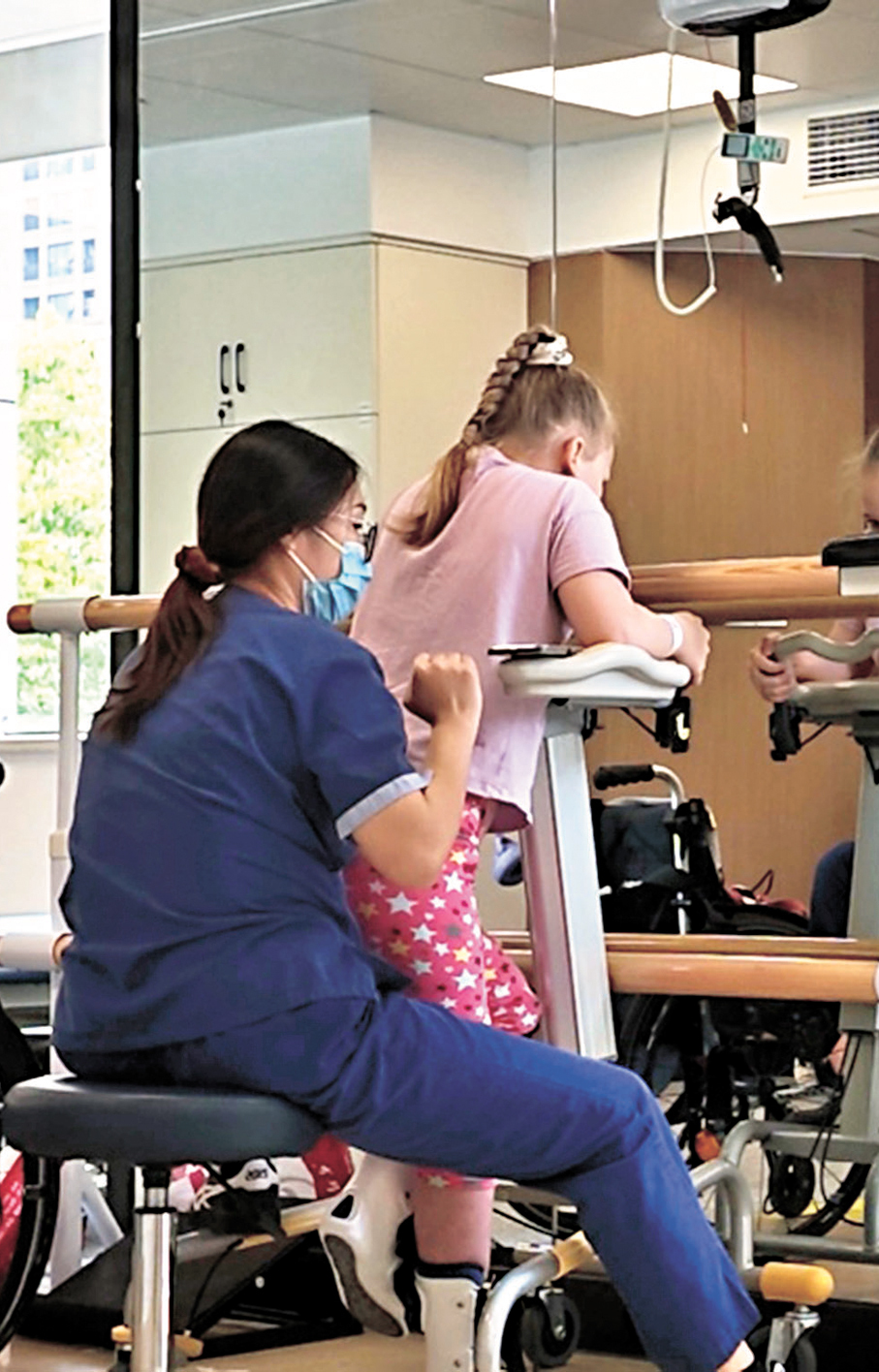
The report stated that signs of movement appeared in Vera’s previously largely immobile legs approximately two weeks after surgery. Under the guidance of rehabilitation therapists, she then progressively undertook exercises involving hip flexion, leg lifting, lower-limb control while seated, weight shifting in standing, and stepping.
A team led by Xiong Bing, Deputy Director of the hospital’s Rehabilitation Department, adjusted stimulation parameters in response to Vera’s motor performance to coordinate electrical stimulation with her active movement training.
Approximately one month after surgery, Vera could stand steadily with assistive support. Sensation in the soles of her feet and hip movement also gradually improved. By approximately three months after surgery, she could voluntarily take forward steps using a walker.
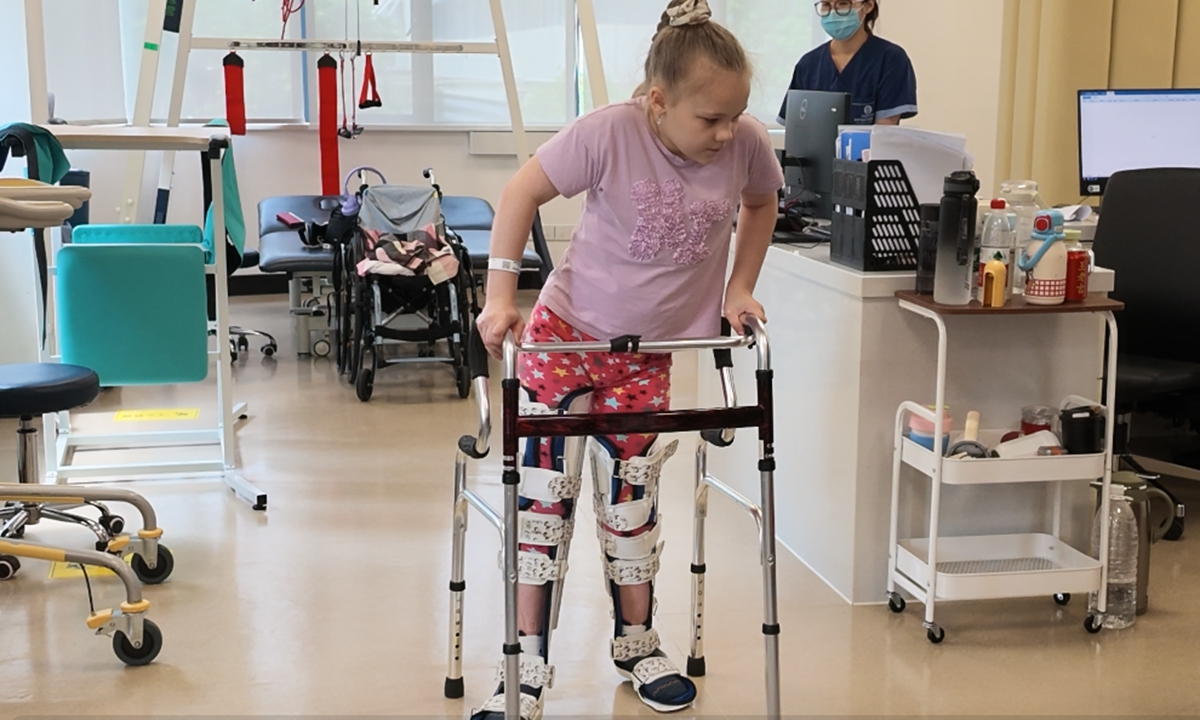
This progress represented a partial recovery of voluntary walking ability with assistive support. Continued rehabilitation remained necessary.
How Does the Closed-Loop System Support Rehabilitation?
According to the original report, Professor Xu Kedi of Zhejiang University’s College of Biomedical Engineering and Instrument Science explained that the system delivers electrical stimulation through implanted electrodes and a pulse generator. External software controls the stimulation parameters, while wireless electromyographic sensors on the legs provide feedback to guide adjustments, forming a closed-loop control system.
The hospital team described the technology as independently developed in China. As of the original report’s publication, more than 20 patients with spinal cord injuries had undergone the procedure, with varying degrees of improvement in lower-limb function reported in most patients. Vera was reported to be the hospital’s first international patient with a severe spinal cord injury to achieve walking with an assistive device following implantation of the closed-loop spinal neural interface.
The team also emphasized that the technology is currently intended primarily for patients with incomplete spinal cord injuries and is not suitable for all patients with paraplegia. Eligibility requires specialist assessment of the individual patient’s condition.
Rehabilitation Continues After the First Steps
The original report stated that Vera planned to return to Russia to continue rehabilitation. For her and her family, being able to perform more movements and take steps with a walker represented meaningful progress.
The medical team’s next goal was to help her gradually transition from a walker to two crutches and improve her ability to manage daily activities independently. Whether this goal can be achieved will require continued assessment during rehabilitation.
For Vera, learning to walk again remains a process requiring patience and persistence. Her words, “I like walking,” capture both the progress she has made and her hopes for the future.
Source: Chao News, “In Hangzhou, She Learned to Take Steps Again: The Second Affiliated Hospital, Zhejiang University School of Medicine Performs Closed-Loop Spinal Neural Interface Implantation to Help a Russian Girl Walk” [original article in Chinese], published on September 2, 2026.
This article has been compiled and adapted from the original report. All treatment progress and figures reflect the information available at the time of that report’s publication. Outcomes in this individual case do not establish the outcomes that other patients may achieve.
Have questions about this topic?
Submit your case for a written specialist opinion — no obligation to travel.